
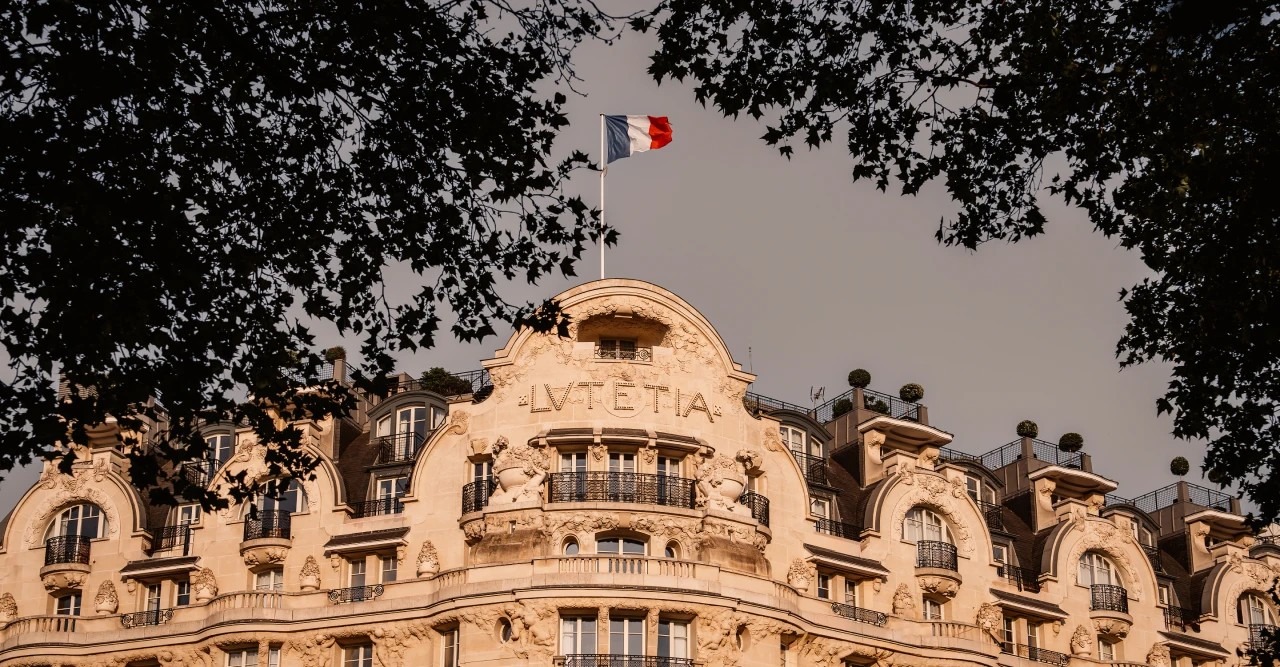
Introduction
Before diving in, let’s jointly define the terms and boundaries of the subject.
What is Soft Power? It refers to the international influence a country exerts based on its culture, diplomacy, and values. The term was coined by American political scientist Joseph Nye in 1990, who contrasts it directly with Hard Power, or "Authoritarian Power / Strong Power," which is based on threat, physical force, and monetary constraints.
The main global Soft Power players in 2026 (according to the Global Power Index (1)) are, in order: 1- the USA (cinema, technology, culture, and language). 2- China (economic growth, tourism, and cultural exchange). 3- Japan (anime, gastronomy, and design). 4- The United Kingdom (language, universities, music, and diplomacy). 5- Germany (engineering and sciences). 6- And finally our France in sixth place with gastronomy, fashion, arts, language, and cultural diplomacy with the Alliances Françaises.
“In the century we live in, any power endeavor undertaken by a state must combine both hard and soft power resources to establish smart power strategies.” — Nye.
Powerful countries know how to combine the two, transforming this fusion into "Smart Power"; like the USA and China. On one hand, we have powers that shine solely through Hard Power, such as Russia. Then others almost exclusively through culture, which is the case for England and France. So let's clearly understand that France's influence today stems partly from its cultural power.
But has it always held this rank? Is French culture as powerful as we believe? Has it lost some of its "aura"? And, if so, will it ever regain that glory that those under twenty will never know?
I — France as a Global Power, and its Achilles' Heel
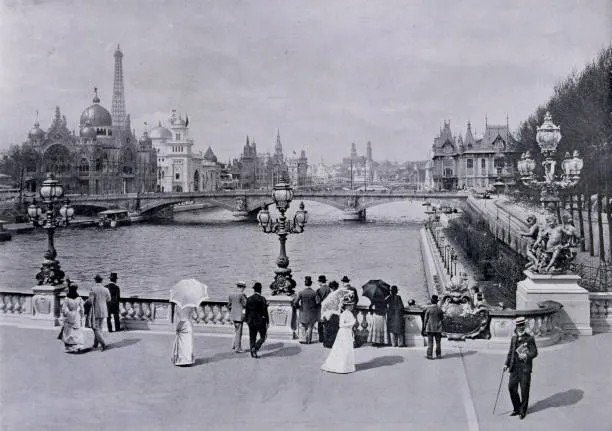
France in the 19th century and the first half of the 20th century overflowed with this "Jules Verne" spirit of innovation and creativity. I could spontaneously name figures like Hugo, Flaubert, Haussmann, Eiffel, the Lumière brothers, Debussy, Descartes, Camus, and so many others. I also think of the creation of haute couture houses, the codification of gastronomy, and the advent of the French art of living. It is not unreasonable to assert that Belle Époque France reigned supreme over the world. It was the "radiant beacon of civilization," as some authors write.
Then, after this period of splendor, like a terrible backlash, came the absolute carnage: 14-18. Mustard gas disfigured an entire generation of solid, robust Frenchmen. In the mud, the glacial cold, malnutrition, and disease felled as many as enemy shells. But despite this disarray, France managed to recover for a time.
They say hope springs eternal, and the famous Roaring Twenties followed. This enchanted interlude of about ten years saw its life force and its fleeting pleasure brutally crash against a wall. That of the 1929 financial crisis.
Europe, severely affected, was prone to unprecedented monetary inflation. Some countries saw their living standards plummet radically. Mass unemployment and governmental instability gave rise to radicalization. Creating ideologies from which there was no turning back. Amidst all this, France, less affected than others, nonetheless managed to hold its own. Its diplomacy was influential, and certain sectors still dominated internationally, such as: fashion (Coco Chanel), painting and design (with Art Deco), and literature (Aragon or Éluard).
But across the Rhine, an offensive was brewing that would prove fatal to this beloved France, which would never be the same again…
II — Post-war Americanized France, a mere foil?
It's not uncommon to sometimes get lost on YouTube and stumble upon INA archives where young people speak French that would today be perceived as “elitist.” Yet, this language has been present and practiced for centuries. These young people are able, in front of a camera (which was rare for the time), to express themselves eloquently, are elegantly dressed, and above all, they have a rich vocabulary!

Symptoms of a bygone era? But not without regret...
Our parents' and grandparents' generations lived through this era. It’s fundamentally not so long ago, so what happened?
When France was liberated in 1944, everything had to be rebuilt. One country, through its propaganda, would declare itself the GREAT victor: The United States of America. Claiming all the glory for themselves (at the expense of the Soviets, the British, the Canadians, and the French too). The message would be barely veiled: they would seek to impose their hegemony on Europe, and France would be their gateway.
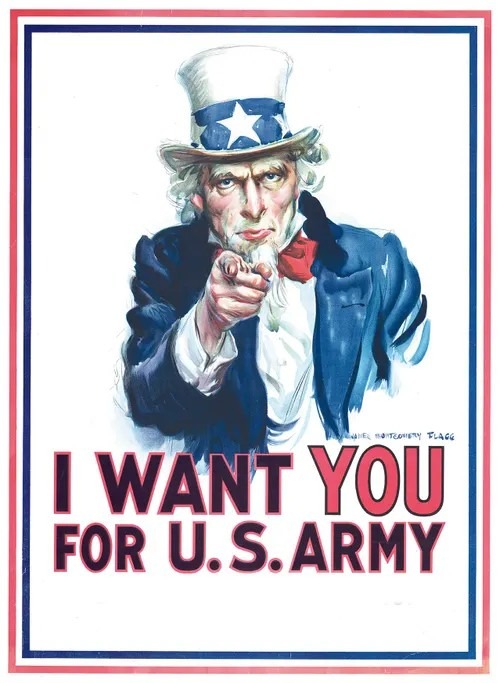
They would go on to turn our country into a “military protectorate” or, more crudely put, a lackey under Uncle Sam’s thumb. If it weren’t for the Grand Charles, we would no doubt be learning to speak English from kindergarten.
Gaullism, moreover, is ideologically characterized by its national independence and its ability to act as the balanced “third way” during the Cold War. But de Gaulle could not stop all the successive waves of Americanization either. Thousands would wash ashore on French beaches: Hollywood films, the establishment of fast-food chains, and discount food. Not to mention television channels and the arrival of ads, series, and music from across the Atlantic directly to the source; into homes. All of it selling the famous "American Way Of Life".
The Trente Glorieuses (Glorious Thirty) were marked by this frenetic globalization, the slow loss of values, and the erosion of the common foundation that defined the France “of before.” The glass is now in the apple.
III — From the 70s to today, the beginning of the end?
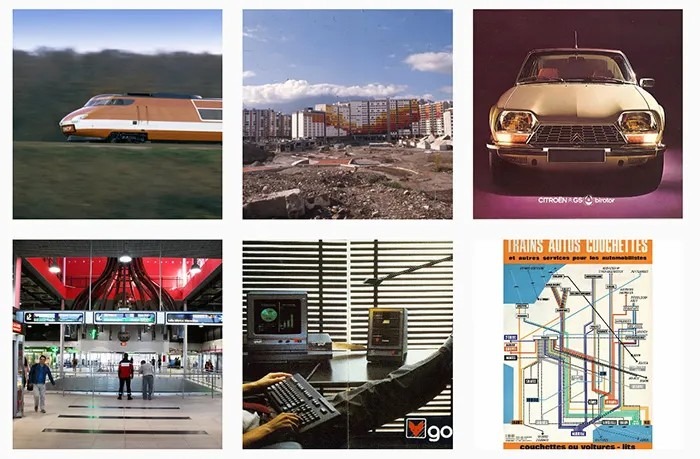
France, under partial guardianship, nonetheless continued to innovate in technology. Reaching its peak under Valéry Giscard d’Estaing with the Minitel, the nuclear power fleet, and the TGV. It introduced the new wave of cinema with directors like Truffaut and Godard. Actors Belmondo and Delon were intergenerational icons. French diplomacy and francophonie were also influential. So what went wrong?
A few years prior, there would be a turning point: May 68. Profoundly transforming mentalities, this student revolution would trigger a downward spiral that seems irreversible. A series of events followed, plunging France into an infernal loop: the 1973 oil shock, the inversion of values by the boomer generation, accelerated globalization, subsidized (and not transmitted) culture, the end of the Cold War, the country relegated to a third-tier state, the Maastricht Treaty (the beginning of the loss of political sovereignty), and the end of the national narrative.
The new millennium did not bring a miraculous rebound: digital lag, loss of Francophone cultural power, declining intellectual output, the overpowering influence of the USA, Korea, and Japan. France became a branch office. Universities and education became obsolete (not to say mediocre), with the closure of institutes and cultural centers.
Then, from 2010 to 2025, we reach the end of this decadent cycle: a wave of attacks, the “start-up nation,” a cathedral gone up in smoke, catastrophic pandemic management, neo-colonialist diplomacy and coups d'état in Africa (Mali, Burkina-Faso, and Niger). And the final nail in the coffin: inflation thanks to the printing press and the billions of "magic" money distributed like candy everywhere with no return on investment.
My friends, the situation is dramatic. But despite this alarmist and somewhat defeatist picture, it is important to remember that France has known worse, far worse. It has always recovered, and I would like to restore a touch of positivity here.
Doesn't the popular saying go: “When you've hit rock bottom, the only way is up”?
Conclusion
The observation is simple: in their attitude, their consumption, and their language, French youth prefer the USA, Japan, or Korea. Without (for the most part) ever having set foot there. Why is that? Because French culture no longer inspires dreams, confound it!
It has been distorted for the benefit of an Americano-English and Sub-Saharan culture (for which I actually have much affection), but which, in some respects, are incompatible with that of France.
Also, what is predominantly taught (from my own experience) is a national narrative of culpabilization, when it’s not sprinkled with pompous texts (I’m thinking primarily of historical events judged with our contemporary prisms, or the incredibly boring Les Liaisons Dangereuses — yes, I’m dropping some stray bullets).
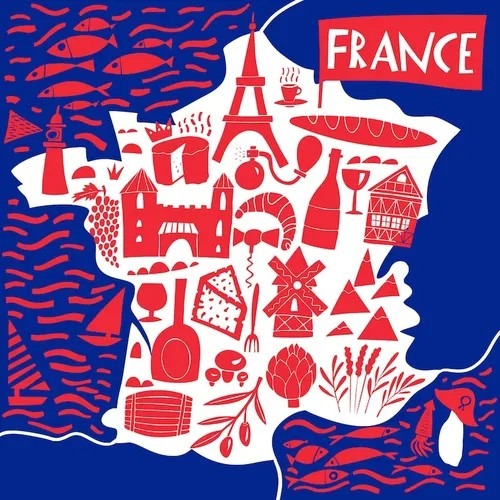
French culture has so much to offer that I wouldn't know where to begin. Gastronomy, Landscapes, Timeless Figures (Napoleon, Chevalier Bayard, Joan of Arc, Romain Gary), our heritage (Gothic Cathedrals, regional food, our traditions), our mentality of resistance, for what comes to mind.
Know that in June 2025, "Focus 2030" (2), a Think-tank, after the suspension of USAID, asked emerging countries with whom they wished to collaborate in the future. The answer: China as the first preferred partner and France in second place. So all is not lost, it’s never too late. France has a past to reclaim and a future to build.
People of good will, united, can be capable of restoring our culture to its former glory. And here, below, are the foundations upon which we can hold firm and build:
First, the French Language, which is the official language in 32 countries (fourth globally, with 400 million speakers, 65% of whom are in Africa). Tourism, the world's leading destination since the 1980s. Luxury and Cultural Heritage, which generate significant revenue, and “the French art of living” inscribed on UNESCO’s list. International Education: 440,000 students abroad, 800 *Alliances Françaises* worldwide, and sixth in the global ranking of scientific publications. Finally, Gastronomy: we are the inventors of the art of eating, with 650 Michelin-starred restaurants in France (including 31 with three stars), representing 20% of the world's starred establishments, and more than 350 protected designation of origin products (wine, cheese, bread, cured meats, oil, etc.).
I regret to say it, but our country is a declining power (like many Western countries). Nevertheless, France still enjoys great esteem internationally, and Francophilia is a very real thing. So, let us prove worthy of our millennial culture and disseminate it to as many people as possible, so that what so many have fought for and dedicated their entire lives to may never die. It is a monumental heritage; let us rise to the occasion.
Thank you for reading me this far.
Your Servant,
Nicolas.
(1) Ranking based on Brand Finance's Global Soft Power Index 2026: https://brandfinance.com/press-releases/lindice-de-soft-power-de-la-france-recule-pour-la-premiere-fois-depuis2021
(2) Focus 2030 / Toluna – Harris Interactive Survey (2025) on the perception of French aid in 6 partner countries: https://focus2030.org/IMG/pdf/rapport_toluna_harris__perception_de_l_aide_de_la_france_dans_6_pays_focus_2030_.pdf