
Nowadays, flying has become unbearable, not to say hellish. Your flight is announced for 12:37 PM. So you get out of bed at 4:37 AM (you can never be too careful). Departure by car for the station at 5:01 AM. You get on the 5:37 AM train (but it’s public transport…). Well, the rusty old local train brought you to the airport at 6:37 AM (on time, I was speaking ill). Luggage checked in at 7:01 AM. Security check and passport validated and you should normally have emerged into the labyrinthine duty-free area around 10:37 AM!
Then, after carefully checking that your boarding gate actually exists, going to eat a bit of reheated plastic-wrapped food, and buying another small bottle of water for €9.99 (yes, you drank it like a rat just before being frisked by a scowling agent); walking while looking at all the airport’s display screens every 2 minutes, you should arrive in time for boarding!
But, you lightweight, your ordeal has only just begun; we’re only at the introduction of the game. So, in the meantime, you wait with your arms crossed in the cramped corridor, squeezed between multicolored suitcases and that shady character sticking to you (he’s practically breathing down your neck, the scoundrel), as if the plane was going to leave without him.
Once in the central aisle of the plane, having endured the looks of disgust from the people in business class, as if facing rabble straight out of the zoo, having snaked your way through with a timid “excuse me, I think this is my seat,” having settled into the middle seat, your backpack on your lap (since there was no more room in the overhead compartments), your knees already irritated by rubbing against the seat in front, having witnessed the stewards' dances (because it’s their eighth day of work without a break), having watched them with a half-curious, half-embarrassed look, having taken kicks from the screaming kid in your seat, and waiting for the plane to start moving so you can take out your computer to do… you yourself don't even know what to do. And normally, I repeat NORMALLY, the plane will take the runway at 1:36 PM and take off at 1:37 PM!
Yes, we're on schedule (an hour late; but nothing out of the ordinary so far). And you tell yourself that once airborne, “the worst is over”… No, really? You truly believed that? Deep down, you know that's nothing compared to the screams of the “cattle class” during turbulence (even though it's normal), the lukewarm coffee served in a plastic cup (always that famous plastic), the seat in front that reclines without warning to smash your knees (you should have bought the “extra legroom” seat), the rushing up of the impatient when the plane lands and stops (even though it won't open its doors for another 30 minutes), the serpentine carousel and the interminable wait for hideous fluorescent suitcases, the explanations to give to the glassy-eyed customs officer watching you as if you were Escobar (when you're just there to: eat, drink, and above all do nothing), dodging taxis that want to drive you three times around the city before magically finding your hotel's original address, and after ALL this joyful journey you should arrive around, say, 11:37 PM (if everything goes correctly).
Finally, all this long diatribe (which sounds like it's been lived) just to say: aviation, it's not what it used to be, goddammit!
Despite the deliberately coarse streak, I still want to clarify that all the trades and professions that work and evolve in this sector (from pilot to mechanic to airport staff) are respectable people. But I can't help but wonder where the era of innovation in this world has gone? Because aviation, my friends, was indeed a revolution a century ago.
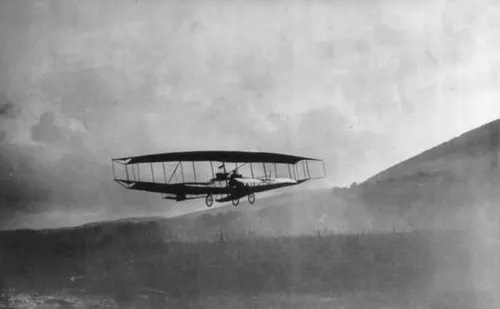
Where have my crazy lads gone? Those with mustaches trimmed over lips parched from open cockpits. Those madmen who crossed the Atlantic breadthwise at the controls of scooter-powered planes (literally), to bring back paper mail to some godforsaken desert outpost.
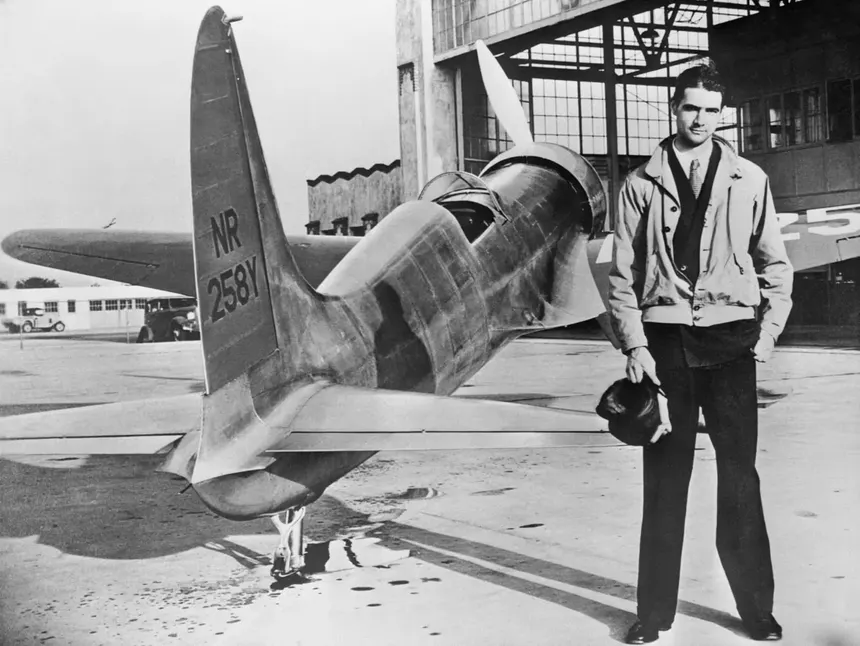
Where are my suicidal adventurers? The perilous takeoffs on wet dirt runways? Their outfits that dressed every style on the planet, so wonderful were the aviators of that period? The goggles hooked to leather helmets, a cigarette dangling from their lips? Where are they, my Howard Hughes, my Roland Garros, my Amelia Earhart, my Henri Guillaumet?
But before tackling the legend, if this subject isn't your cup of tea, allow me to tell you about an animated film that, in my opinion, is very underrated. It's about both the glorious era and the decline of aviators. This film is well worth seeing, and it will make you adore the world it portrays:
Every subject, no matter how one discovers it, has its own gateway; mine was this animated film released in 1992 by the celebrated Studio Ghibli — Porco Rosso (The Red Pig)
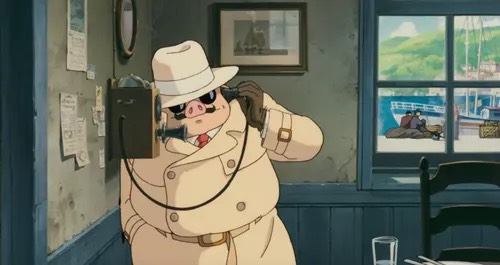
As for the synopsis: we follow the adventures of Marco, nicknamed “Porco,” a former war pilot who has become an air pirate hunter (yes, you read that right), during the interwar period. This was a time heavily marked by the reconversion of solitary adventurer pilots into government (military) pilots. But our hero isn't cut from that cloth:
“I'm a bounty hunter, no longer a war pilot,” he'll say.
The main character, who has become a pig, evolves in a man's world. This affliction comes from a self-inflicted curse during the First World War. Unable to bear humanity very well after what he experienced, he curses himself, transforming his nose into a snout. And you're undoubtedly aware that this choice of animal by the animation studio holds significant symbolic meaning for those familiar with Miyazaki's filmography.
The story unfolds then in the skies of Northern Italy and the Adriatic Sea. The atmosphere is multifaceted. Firstly, childlike (with endearing pirates and comical moments); adult (with themes like impossible love, shattered lives, and the passage of time); but also dark with the political police (Italian fascism) searching for traces of communist dissent.
It's important to specify that the communists here are the embodiment of resistance; just like the maquisards in France. Hence, by the way, the “Rosso” in the title, which is also the color of our dear pig's plane.
But beyond the story, the plot, the music, the well-written characters, the landscapes, and the very particular atmosphere, a fabulous poetic aesthetic shines through.
It should be noted that Miyazaki’s father was an aircraft manufacturer for the Japanese army, which undoubtedly inspired his son to transmit this passion for flying objects. In the anime, we thus find: seaplanes, biplanes, the first prototypes of fighter planes, and many others. Without even mentioning the most beautiful scene in the film, which I will not spoil (a wink for the one of the ocean of clouds).
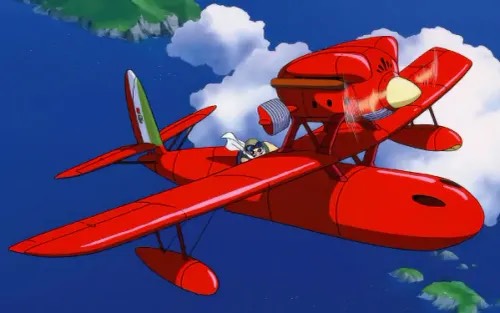
Yes, this film is indeed the genesis of my adoration for this universe; it rhymes with the unknown and adventure. But to establish and create such a work, Miyazaki and his teams must have based it on the stories of real men, right? So, we are going to analyze who these gladiators of the sky are.
Several names emerge when you do your homework on the subject, and all share that chivalrous spirit of the air:
Bellini, an Italian test pilot, died in 1931 during a test flight of the Macchi seaplane, built to break the sea speed record.
Curtiss, whose real name was Glenn Hammond Curtiss, American aviation pioneer and co-founder of Curtiss-Wright, and most importantly, creator of the Curtiss R3C-2 seaplane which won the Schneider Trophy in 1925. He would set a speed record for seaplanes (approximately 395 km/h).
Roald Dahl, born in 1916 in Wales, of Norwegian origin, joined the Royal Air Force in 1939 and became a fighter pilot. Seriously injured in 1940 during a crash in Libya, which would disable him for life, he was then sent to the United States on a diplomatic mission, where he began to write. His military achievements: Greek and Crete campaigns (1941), Syrian campaign (1941), totaling 5 aerial victories.
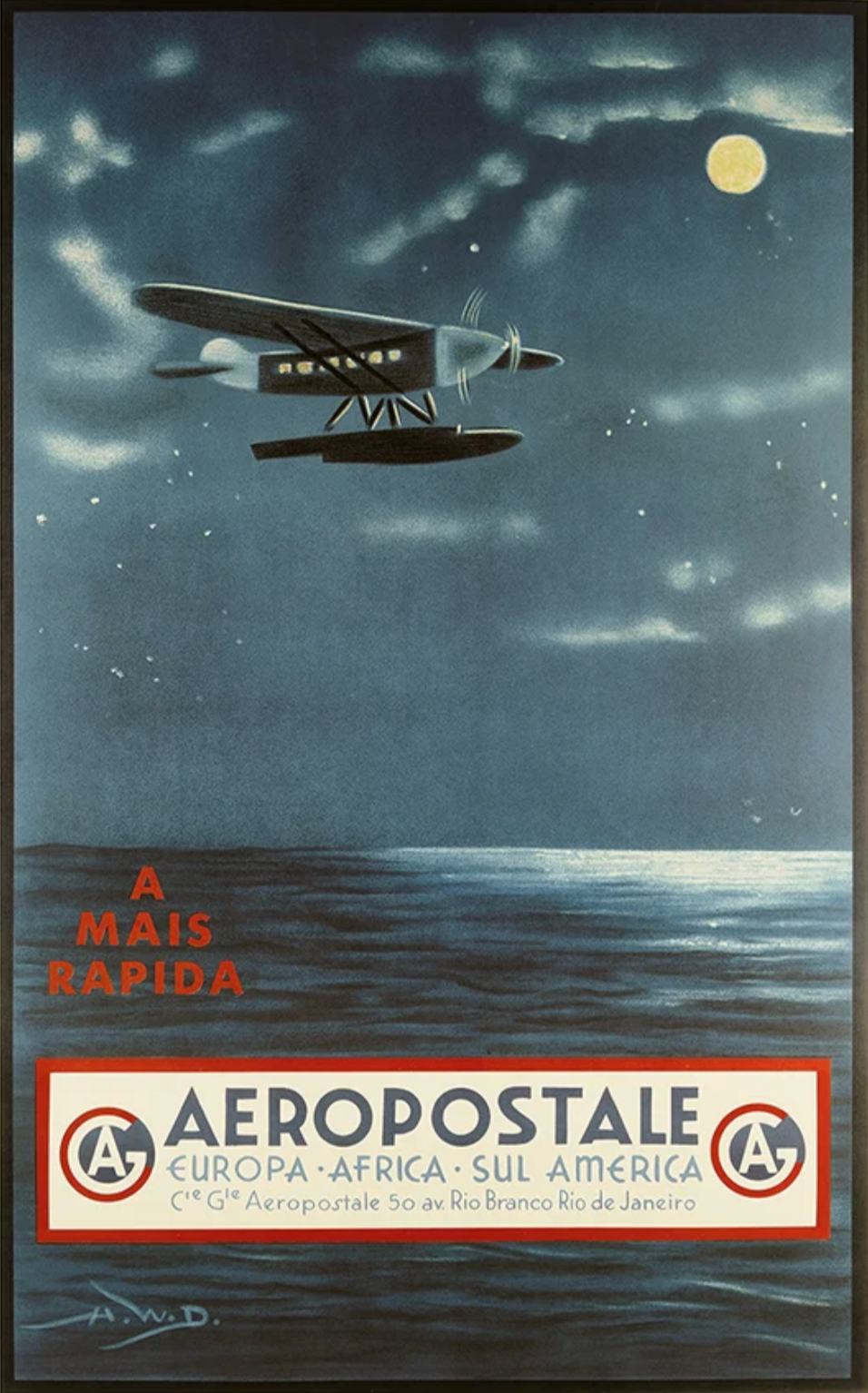
Then, the last one, legend of legends, our national hero and prophet of his discipline, Antoine de Saint-Exupéry. Born in 1900 in Lyon, died on July 31, 1944, he was first a pilot for Aéropostale (1926-1932) where he carried out transatlantic crossings and broke distance records. He would be a journalist and writer before being mobilized again in 1939 as an aerial reconnaissance captain (GR 2/33); he fought during the Battle of France, then joined the United States and flew P-38 Lightnings on reconnaissance missions over the Mediterranean, until his tragic disappearance in 1944; he was awarded the Croix de Guerre and the Légion d’Honneur.
Miyazaki would declare about him: “For Porco Rosso, my true inspiration is above all literary. One should look for an influence more on the side of Antoine de Saint-Exupéry, a writer whom I revere. The poetic universe of flight, the pilot's solitude, the nobility of risk, and the melancholy of aviation between the two wars — all this comes from Night Flight, Wind, Sand and Stars (Terre des hommes), and Flight to Arras (Pilote de guerre).”
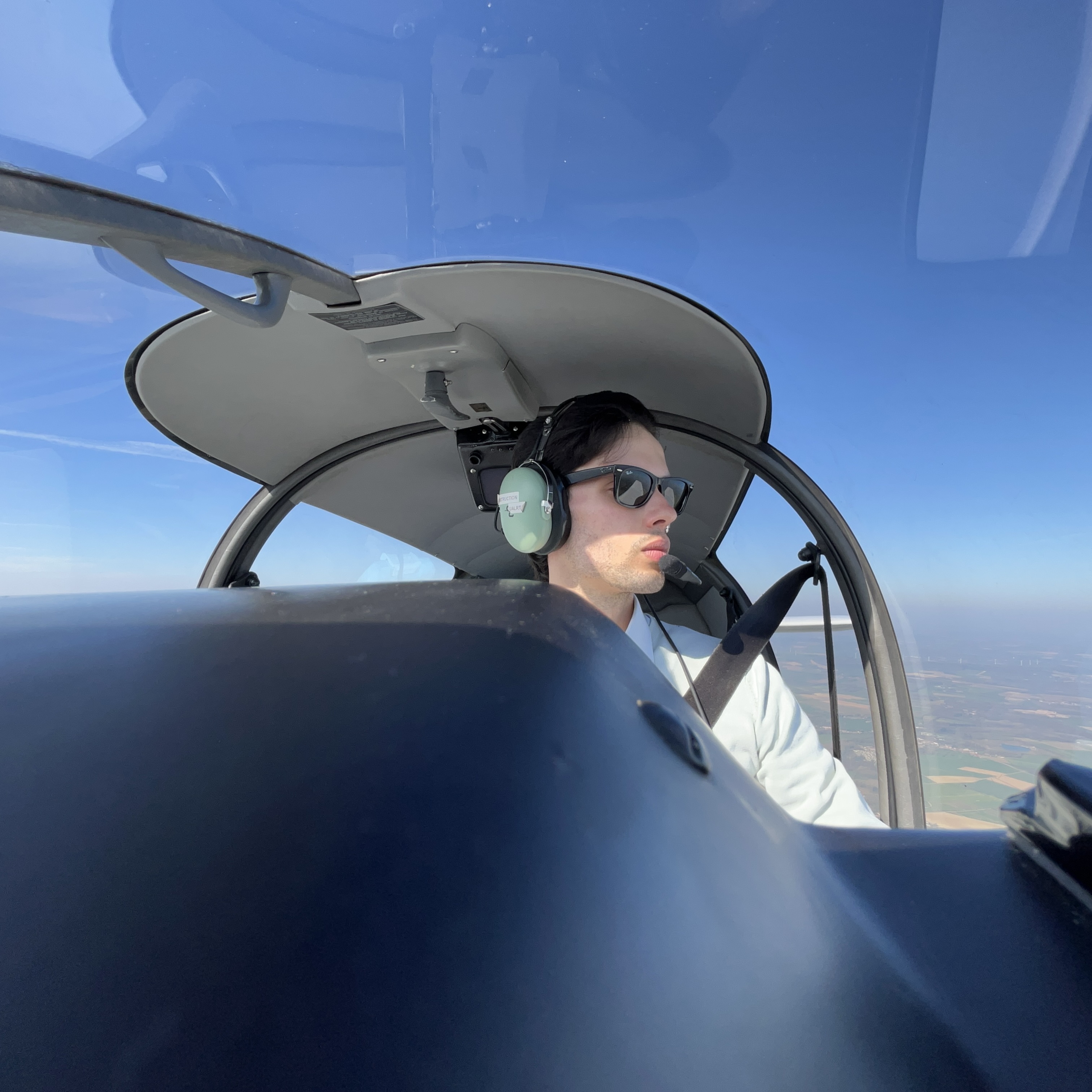
Then, the time for adoration, for imitation, arrived. For several years now, I have learned to fly, partly to try and get closer to my heroes. The circuit patterns, the visual landmarks, reading a map in flight, answering the radio — all this while half-pinching myself to be sure I wasn't dreaming; how could one not be ecstatic? You get lost in the dashboard, you activate the throttle, you say aloud “airspeed active,” you wait for the first 100 km/h to make the first rotation, you level off for acceleration and pull back on the stick to feel what the pioneers experienced…
I don't think this will be my only topic on aviation, so much there is to say about it in terms of global history and inventiveness. And any curious person worth their salt should learn the basics of what the production of a dream as old as the world is.
When our ancestors watched migratory birds and whispered internally to themselves, “Will we too one day be able to fly…?”
I hope to have taken you with me to the borders of a passion beyond measure, shared with all the dreamers of the earth. And long may the spark that awakens the brave last.
Your humble servant Nicolas
“We are dwarfs standing on the shoulders of giants” — Bernard of Chartres