
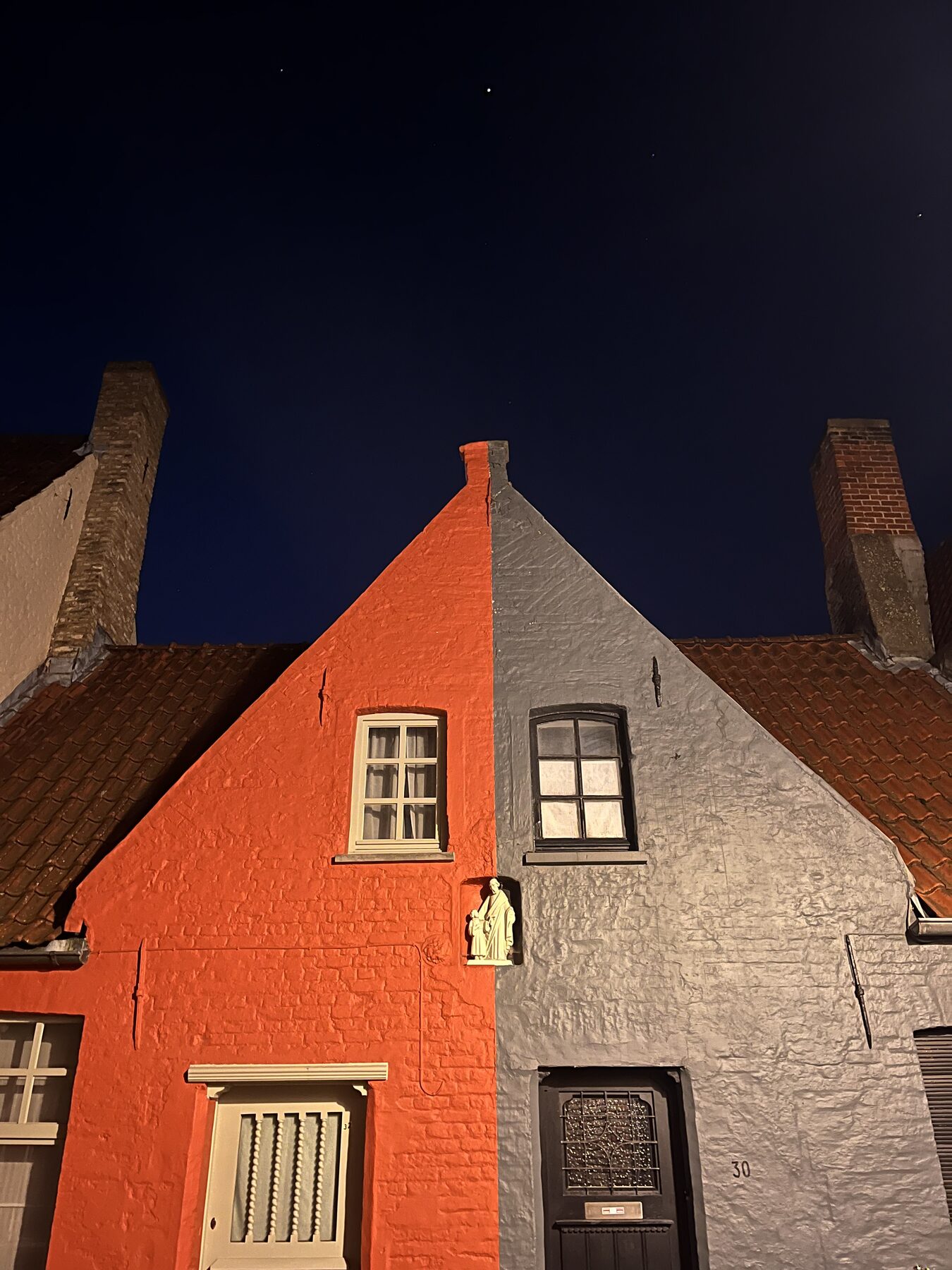
She froze, motionless, like prey anticipating her destiny. A predator, passing in the distance, began the hunt. But, once he caught his prey, he found himself captivated. His stomach, though empty, was filled with an unexpected beatitude in the face of such a marvel. He had no choice but to let the enchantress go, as she stopped and found a peaceful slumber.
Unique, this creature capable of such charms was located in the confines of a flat country. Away from the great currents, the compass pointed to the far north of Flanders. One entered through its imperfect stones. One walked along its soothing canals. And its Gothic bricks seemed frozen in eternal marble.
In this warm land, where gray days are countless, an astonishing testament to yesteryear still stands. Yes, I am speaking here of the splendid Bruges. The very one that froze and fell asleep.
Tesla, according to a famous urban legend, supposedly worked on a time machine: the chronoscope. I can already see those who will raise an eyebrow, and those whose retinas will sparkle. But, for this journey, I will ask you to be both conquerors and credulous. Here is my confession: let yourselves be transported.
So, what are you waiting for to access this deep memory? Pull the brass lever, for heaven's sake!
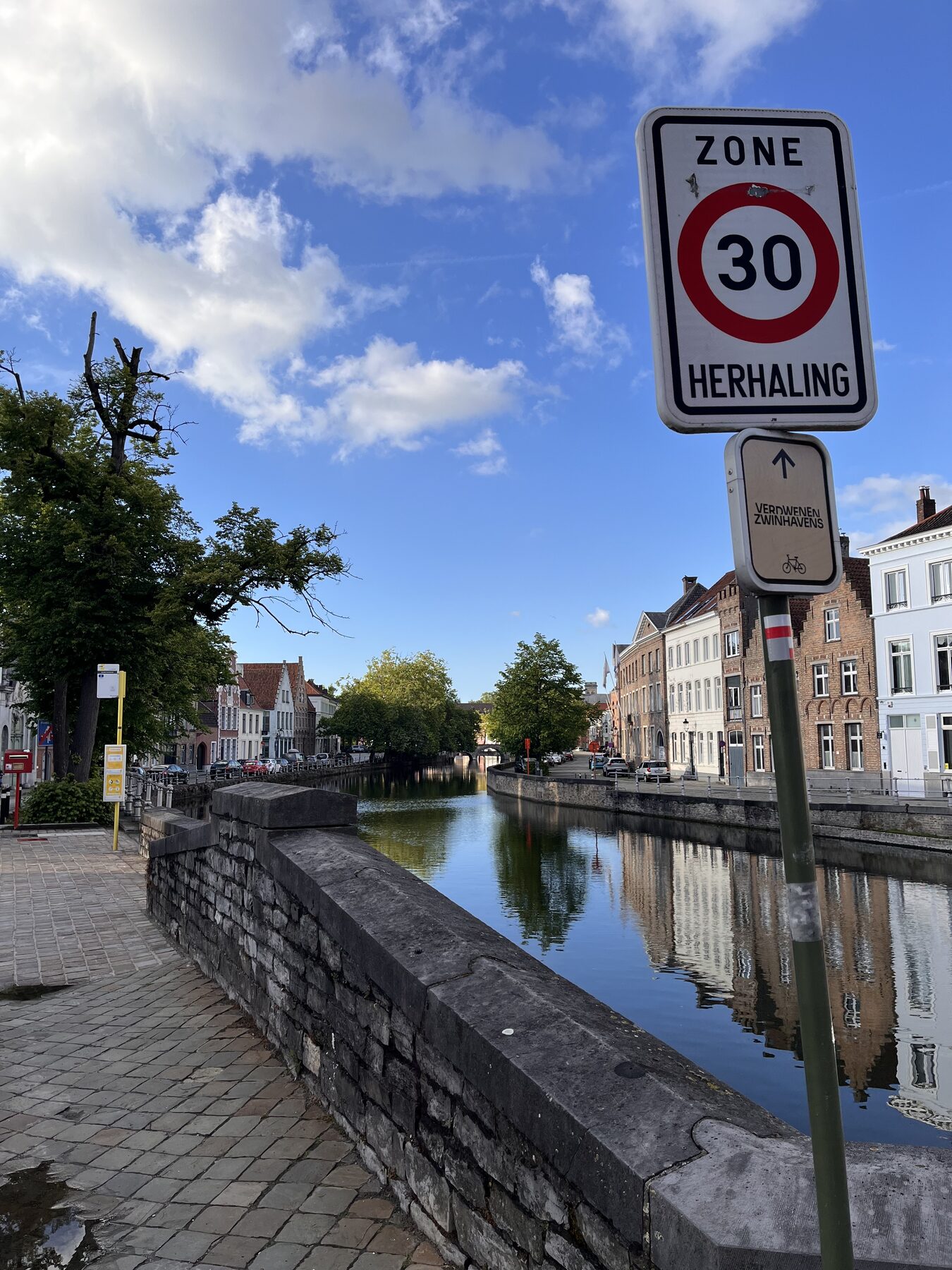
Strolling through the many squares and narrow streets of the slumbering city, it's not uncommon to come across large numbers affixed to facades. They tell you, often in black, the dates when the buildings were erected. Before these storefronts, you might wonder:
“They must predate the Industrial Revolution? — How can I put it… — The French Revolution? — Small fry. — Before Columbus's rediscovery of the Americas? The date is of great importance. — That's quite common around here. — Not as far back as the Crusades, surely? — Not all, but we’re getting closer to the essence.”
Know that Bruges indeed embodied the medieval city. A worthy heiress of the Counts of Flanders, it developed from the 9th century onwards, around a fortified settlement associated with Baldwin I of Flanders. It quickly became a major city, then experienced a spectacular rise thanks to its geography, its textile production, and its foreign trade in cloth.
Its zenith came in the 14th century, and three major families contributed to its radiance:
First, the Van der Beurze, innkeepers whose name was the origin of the word “Bourse” (stock exchange). Their building, constructed in 1309, is often considered one of the first organized trading places in Europe. Forming the city's fortune, this goose that laid the golden eggs notably covered wool, weaving, and fabrics.
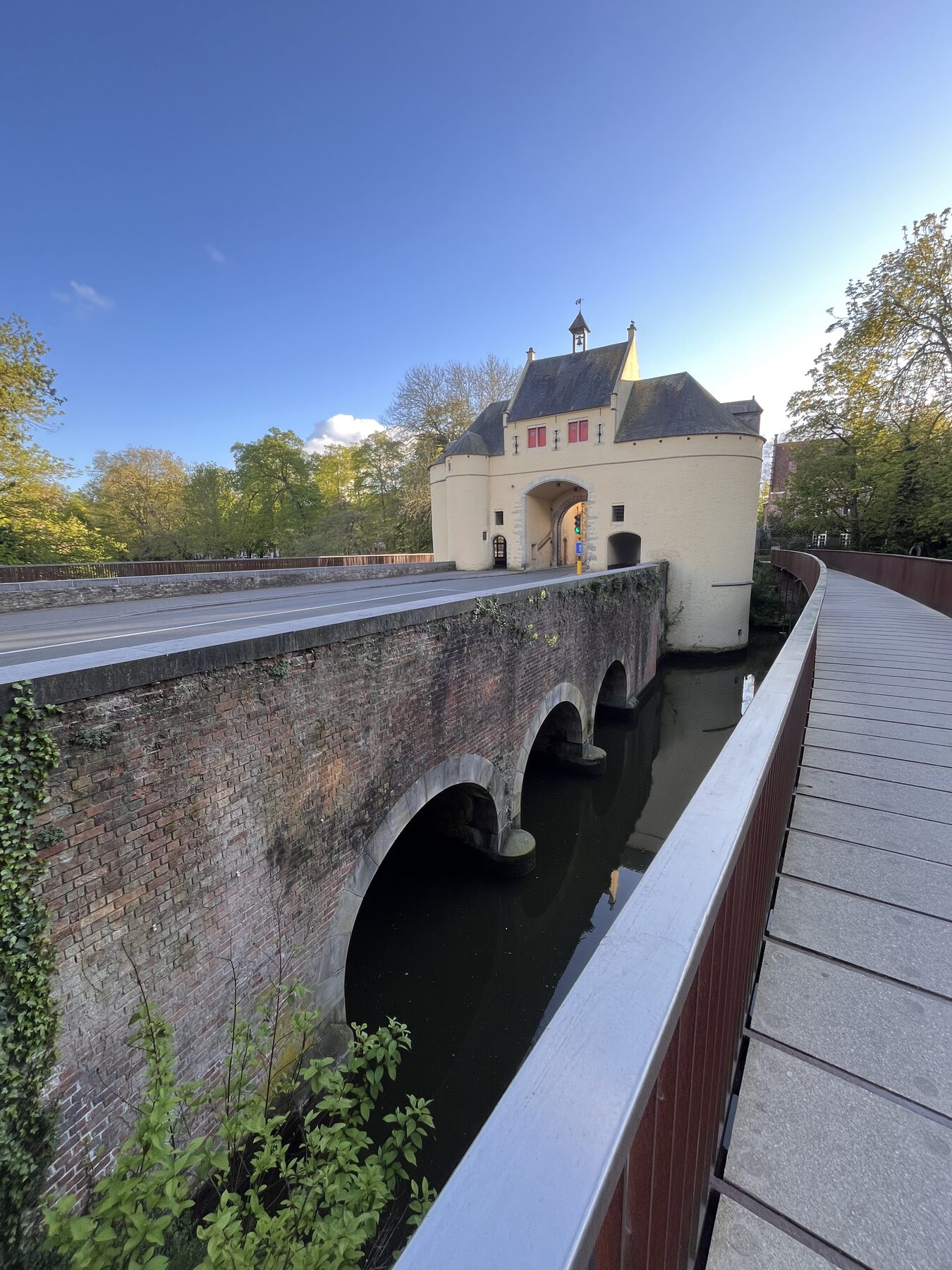
Next, the Gruuthuse, a lineage of nobles, diplomats, and patrons, who grew rich from taxes on barrels of “gruit” (an aromatic blend used to make beer). Their palace, now a museum, remains one of the city's most beautiful.
Finally, the Lanchals, with their white swan crest (seen everywhere), represented the entire symbolic dimension of high administration.
The contribution of these clans considerably improved the quality of life for the inhabitants and led this city, whose access to the sea was limited to a narrow canal, to its heyday. Bruges became one of the indispensable passages of European trade, and its network of canals became one of the veins of commercial exchange.
“When the sun declines on the horizon, the smallest pebble casts a great shadow,” Victor Hugo used to say.
Like all cycles, once the peak was reached, the fall was inevitable. Bruges was no exception. It, which at that time was the center of the known world between Scandinavia and the Maghreb, was relegated to a secondary, much more marginal role with the rediscovery of the New World.
It was snubbed in favor of Antwerp, which had better infrastructure for ships. Though not ruined, it suffered a kind of oblivion for three centuries, finding a partial sleep.
But paradoxically, this decline allowed it to retain its character. Yes, marginalization contributed to its non-modernization. Bruges, whose capital diminished, decided not to renovate due to lack of means. Thus missing, to our greatest delight, its entry into the Baroque and Neoclassical eras. This partly explains all its “ruins,” which have remained intact jewels.
After several centuries of partial slumber, it was rediscovered and reawakened in the 19th century by Romantic artists. Numerous paintings, canvases, and artworks were produced to pay homage to the city. Rodenbach's novel Bruges-la-Morte, which inspired Hitchcock and his film Vertigo, Yourcenar's The Abyss, or Van Eyck and his paintings depicting it: artists used it to draw that very special inspiration.
In the 20th century, it was forced to participate in major conflicts. Although merely occupied the first time, it was miraculously spared the next time by a command refusing annihilation orders, similar to the French capital.
To be perfectly honest, you'll only need an afternoon to follow the most trodden paths. But, to try and decipher the secrets the slumbering city holds, it's better to allow several days. Preferably off-season, when the streets are sometimes empty and that silence reigns which tranquil souls may sometimes seek.
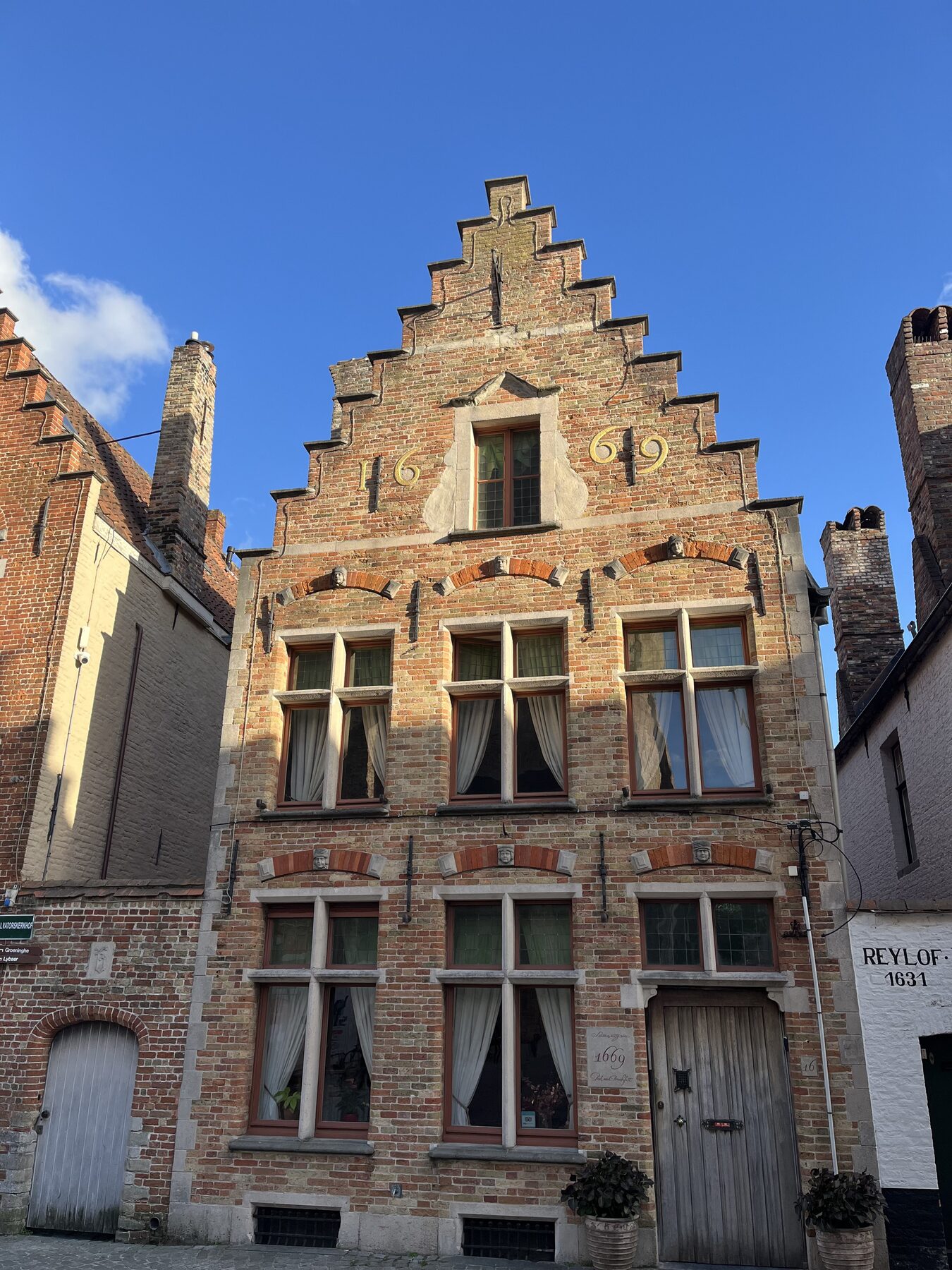
Having explored it more than thirty times over the last two or three years, I can assure you that it initiates us into an almost carnal aspect. That we can let our thoughts wander easily with total serenity. That it can, for those who know how to listen, whisper confidences to us.
It is not just a backdrop; it embodies and is felt.
There is so much to see. Every street corner hides its share of details. Far from the beaten path, we can unearth hidden “Hogwarts,” like Hogewest or the College of Europe, its windmill park, St. John’s Hospital, many discreet statues embedded in house facades, arched brick bridges, almshouses, its cathedral, its Michelangelo statue, and its twenty churches, not to mention the countless museums.
Nowadays, the city unfortunately suffers from a reputation as a museum-city, comparable to Florence, Strasbourg, or Prague, attracting ten million visitors each year to its still fragile historic heart. Especially in summer and for its Christmas market.
So, whether you are a history buff, a writer seeking inspiration, looking for a destination for a “workation,” a solitary dreamer searching for answers, or wanting to spend a night strolling on foot with your other half, how can I not recommend it to you?
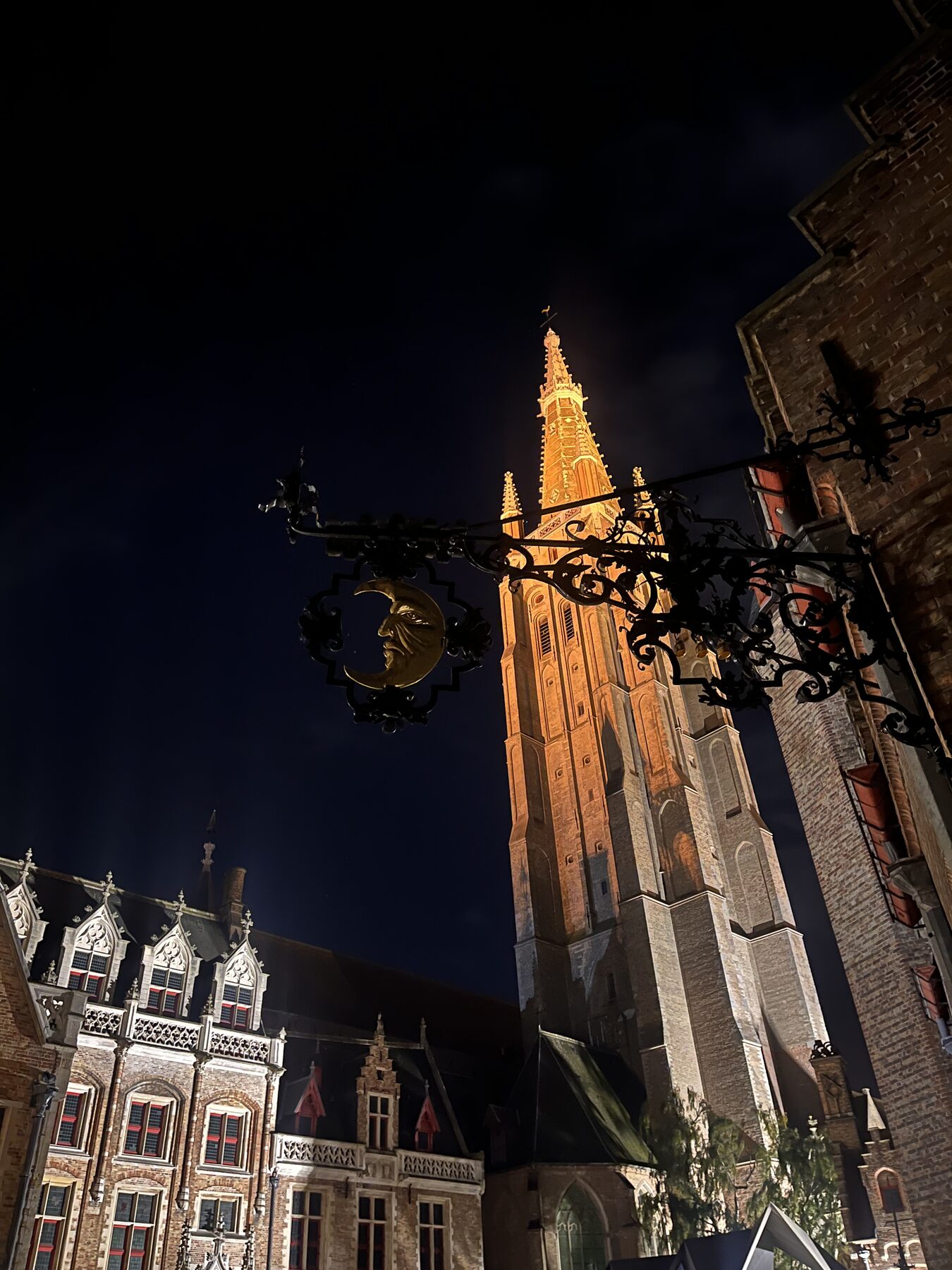
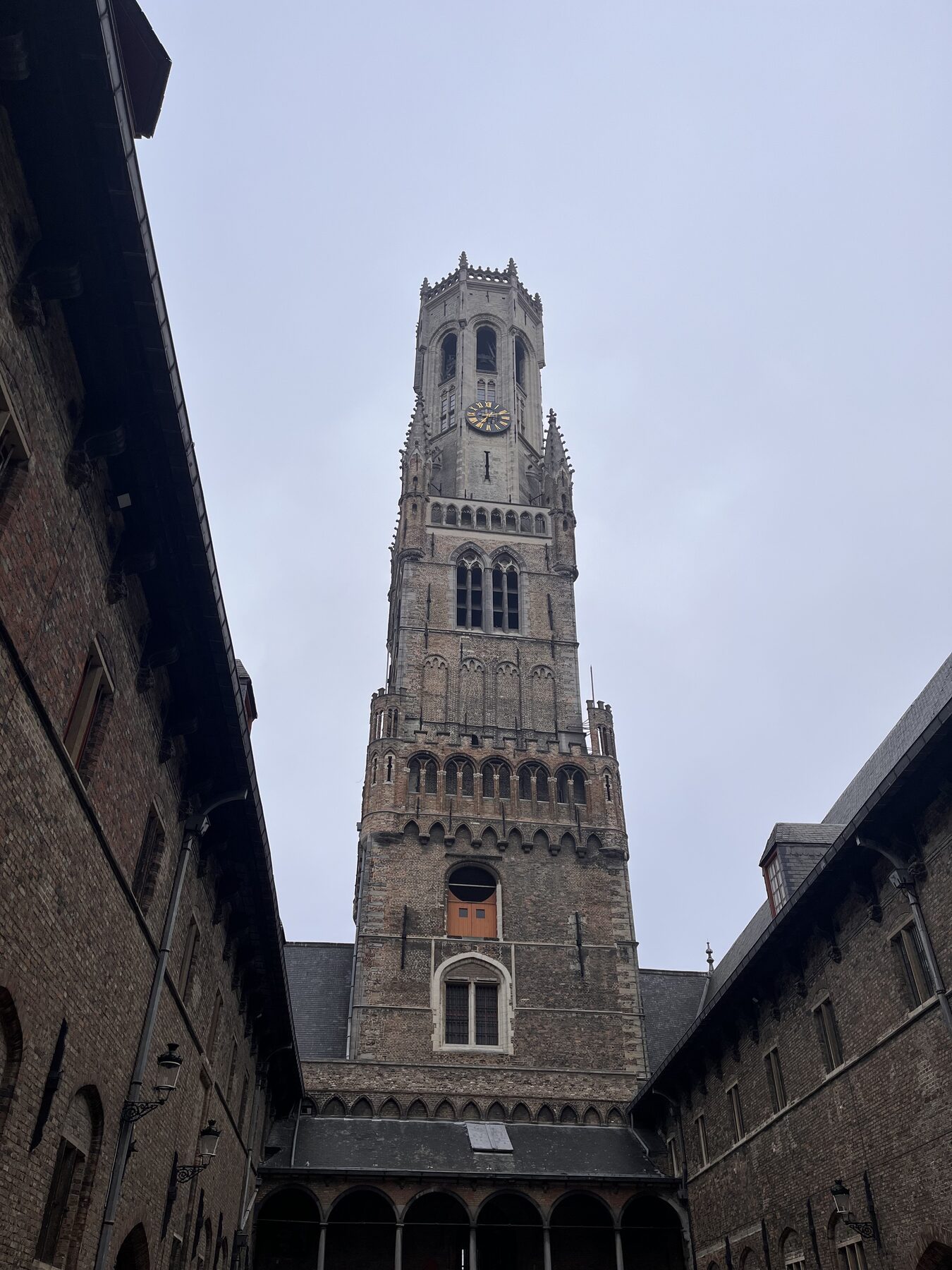
To feel the ancient atmosphere frozen in time, the swans gracefully gliding on the canals, and the iconic belfry of the main square, I can only invite you to explore, get lost, and rejuvenate in this most mysterious Bruges.
Through this first article, I felt compelled to sing the praises and offer an ode to this city, with which I admit to being infatuated. It is she who taught me to think and write while walking. So thank you for making it this far.
I shall now go and kiss this slumbering beauty.
Until next time,
Your servant,
Nicolas.